Creating High-Value Bike Accessories Through Testing
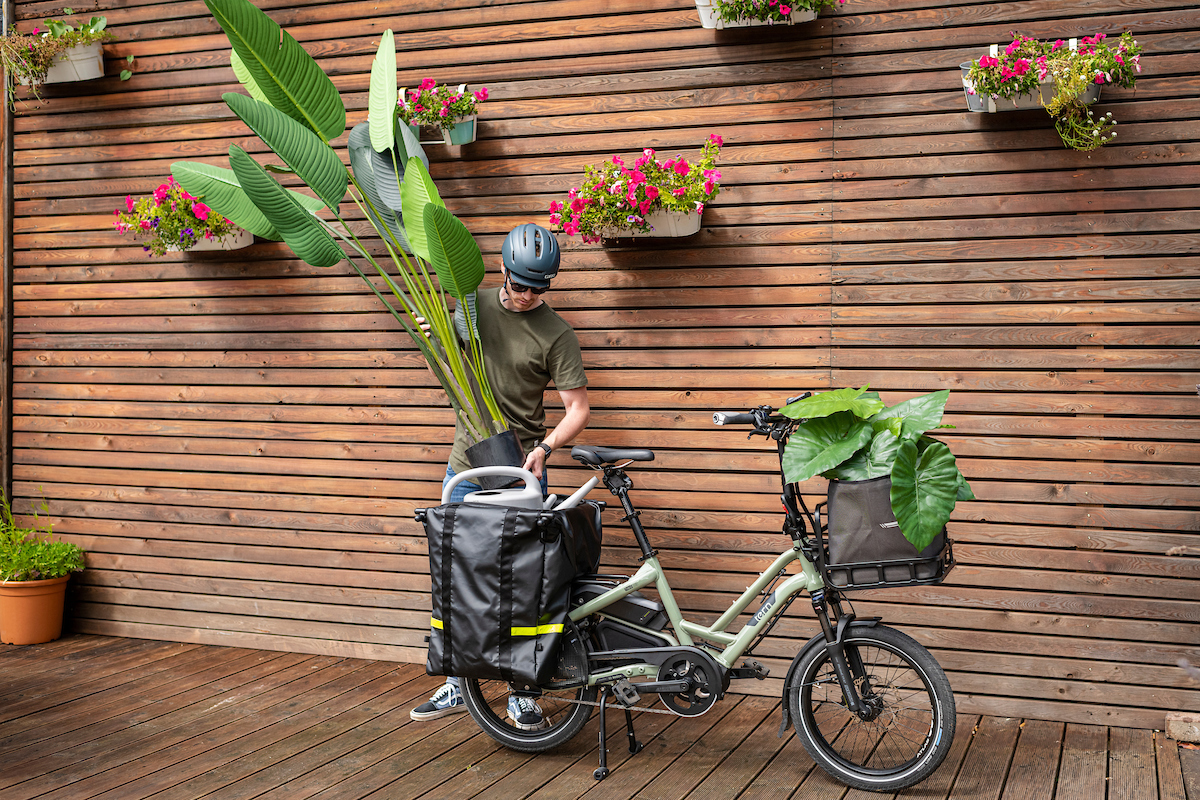
If you want to create a cycling setup capable of replacing a car, choosing the right bike is just the first of many decisions you'll need to make. When it comes to usability, the accessories you add to your bike are arguably just as important as the bike itself. From hefty panniers for the grocery haul to comfy passenger seating for the school run, the right accessories make daily tasks achievable and hassle-free.
That's why we take the design and development of the accessories we sell every bit as seriously as we take bike design. In fact, making bikes and creating accessories for them are two sides of the same coin—the accessories are what let you take full advantage of the bike's capabilities. And just as we rigorously test our bikes, we also test our accessories to make sure they're highly practical and fit for service. In this article, we'll explain how.
Stage One: Tough Love from the Design Team
Our process for testing accessories starts with our in-house product development team. These creative designers put just as much effort into identifying potential problems with new accessories as they do into creating the products themselves. As soon as they create a prototype accessory, they start putting it through the paces by using it as a customer would.
That means trying out an accessory in many different use cases, and with a variety of different bike setups. For example, the team might try using panniers both with and without child seats installed. This process helps the team identify any compatibility or usability issues early in the design process.
Since many of our accessories are designed to stay on the bike at all times for maximum convenience, the team also tests each item in a wide range of weather conditions. In Taiwan, where part of our accessories team is located, we've got the extremes of heat, UV radiation, humidity, and rain covered naturally. In Finland, Germany, Switzerland, and Seattle, where other members of our team are based, we're able to see how our gear responds to freezing temperatures and salt spray conditions.

If the accessory meets our team's standards for usability, the team works with the accessory manufacturer or a third-party lab to design external strength and reliability testing.
Stage Two: Manufacturer or Third-Party Stress Testing
There are standard tests available for some accessories like racks. But for many of our more unique accessories, no commonly accepted testing standards exist. Because our product development team is committed to ensuring safety and customer peace of mind, they strive to help create relevant tests wherever possible.
Whether these external tests take place at the manufacturer's factory or a lab (such as the EFBE or CHC labs in Taiwan), the goal is the same: to simulate the stresses the accessory will undergo and identify any weak points before the accessory goes to production. Our team works closely with the manufacturer or lab to determine what kind of testing is needed and what information to capture.

If external testing reveals any problem areas, the designers use this information to improve the design and make modifications. Only once an accessory has passed both internal and external testing does it move to production.
Pushing Forward into a New Era of Accessories Testing
Sometimes carrying out external testing requires breaking new ground. For example, when our team was developing the DuoStand for the HSD, they worked with EFBE to develop EFBE's first-ever testing protocol for a kickstand, which included loading tests that simulated the harshest situations in the real-world to ensure the kickstand is strong enough to support the weight it was designed for. The DuoStand was installed on a real bike and placed under full load, and subjected to 30,000 cycles of testing in the EFBE lab—through which it emerged without any damage to itself or the bike interface. This meant the kickstand can be safely and reliably used 15-20 times everyday at full load for 5 years!
But we didn’t just stop there. At Tern, we’re always looking for ways to improve our products, whether it’s a bike or an accessory. And a huge part of this is listening to invaluable feedback from our riders and re-working our designs to create something they’ll love even more. Going back to the DuoStand as an example, we’re able to come up with successive generations of DuoStands that featured enhanced stability, adjustability, and even increased strength to offer our riders even more dependability and peace of mind when it’s time to load or unload their precious cargo—all by listening to rider feedback on each generation and improving their designs.
Although a lack of suitable testing standards previously limited bike companies' ability to test accessories in this way, things are starting to change. We're proud to be using our hard-won experience to help move bike and bike accessories testing forward, bit by bit.
Testing accessories isn't yet as standardized as the process for testing bikes, but we'll only sell products we trust to use ourselves and with our families. So the next time you add a piece of Tern gear to your bike, you can rest assured it's been road-tested and shown some seriously tough love before making its way to you.
Related Articles